Mountain Communities Grapple with Soaring Waste Costs Amid New State Emission Rules
Mountain waste disposal is becoming a critical challenge for Colorado’s high-altitude communities in 2026. New state emission regulations are forcing mountain waste disposal facilities to invest heavily in infrastructure upgrades, threatening to triple costs for residents. As mountain waste disposal operations struggle with retrofitting requirements, local governments face difficult decisions about passing these expenses to taxpayers. Understanding the mountain waste disposal crisis is essential for anyone living in or considering a move to Colorado’s beloved mountain towns.
Nestled amidst Colorado’s majestic peaks, the state’s mountain communities are facing an unseen challenge that threatens to impact every household and business: the rising cost of waste disposal. A confluence of ambitious environmental mandates from the state and the unique logistical realities of high-altitude living is pushing local governments to consider substantial hikes in trash collection fees, sparking a debate between ecological responsibility and economic sustainability.
At the heart of this unfolding situation are new emission regulations promulgated by the Colorado Air Quality Control Commission (AQCC) last year. These rules, designed to reduce harmful greenhouse gas emissions, particularly methane and volatile organic compounds (VOCs), emanating from landfills, are a critical component of Colorado’s broader climate action strategy. Landfills are significant contributors to atmospheric methane, a potent greenhouse gas, and capturing these emissions is a vital step in mitigating climate change. The regulations mandate more stringent monitoring, collection, and destruction of these gases, requiring substantial upgrades to existing landfill infrastructure.
Mountain Waste Disposal Challenges: Key Cost and Compliance Insights
While the environmental objectives of these regulations are widely supported, their implementation presents a particularly thorny problem for Colorado’s smaller, often remotely located, mountain county landfills. Unlike their larger counterparts on the Front Range, these facilities typically serve smaller populations, meaning they lack the economies of scale necessary to absorb significant capital investments without a dramatic impact on per-resident costs. The sheer logistics of operating in mountainous terrain further compound the issue. Transporting specialized equipment, materials, and expert personnel to these sites often involves navigating challenging roads, facing adverse weather conditions, and incurring higher fuel and labor costs.
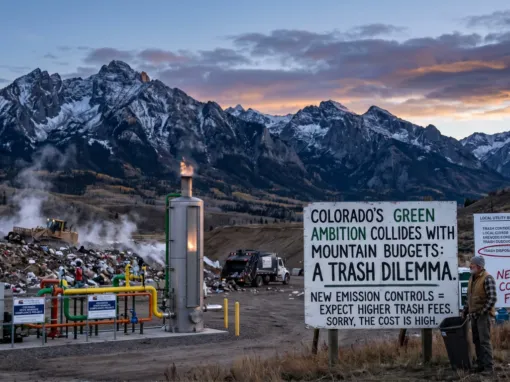
Many mountain landfills were not initially designed with advanced gas capture systems in mind. Retrofitting these facilities to meet the new, rigorous standards requires significant engineering, construction, and ongoing operational adjustments. This can include installing extensive networks of collection wells, sophisticated piping systems, and flares or energy recovery units to burn off or utilize the captured methane. For operations already running on lean budgets, these unforeseen expenses can be financially crippling.
Local government officials across counties like Summit, Eagle, Pitkin, and others are sounding the alarm. They contend that without state assistance or significant adjustments to the regulatory framework, the only viable option will be to pass these increased operational costs directly onto residents and local businesses through higher trash collection and disposal fees. For communities already grappling with the high cost of living, particularly housing and essential services, additional burdens on household budgets could prove unsustainable.
The potential economic ripple effect is a serious concern. Higher trash bills affect not just homeowners but also small businesses, which are the backbone of many mountain town economies. Restaurants, hotels, and retail establishments, already facing razor-thin margins, could see their operating expenses climb. This could, in turn, lead to higher prices for consumers, potentially impacting the tourism industry—a primary economic driver for many of these areas. The delicate balance between attracting visitors and maintaining affordability for residents is a constant challenge, and increased waste disposal costs could tip that balance.
Recognizing the unique predicament of mountain communities, state lawmakers have begun actively seeking solutions. Discussions are underway to explore various avenues, including potential legislative fixes that could offer financial relief or greater flexibility in compliance. Options might include state funding allocations to help smaller landfills finance necessary upgrades, establishing grant programs, or even considering phased implementation schedules or targeted exemptions for facilities below a certain size or waste volume threshold, provided environmental efficacy is not compromised. The goal is to strike a balance that allows the state to meet its climate objectives without unduly burdening vulnerable communities.
The debate highlights a broader tension inherent in statewide environmental policy: how to implement sweeping mandates that account for regional diversity and local economic realities. Colorado is a state of vast geographical and demographic contrasts, and a one-size-fits-all approach to environmental regulation can sometimes inadvertently create disproportionate impacts on specific regions. The situation with landfill emissions serves as a potent reminder of the need for collaborative policymaking that involves robust input from local stakeholders.
Beyond immediate legislative fixes, this challenge also opens a broader conversation about sustainable waste management practices in mountain regions. Could this push for emission reduction also accelerate innovation in waste diversion, recycling, and composting programs? Are there opportunities for regional collaborations among smaller counties to pool resources, share infrastructure, or explore advanced waste-to-energy technologies? While these are longer-term considerations, the current predicament underscores the urgency of rethinking how waste is managed across the state.
Ultimately, the forthcoming solutions will need to demonstrate a commitment to both environmental stewardship and the economic vitality of Colorado’s mountain towns. The outcome of legislative efforts and ongoing discussions will set a precedent for how the state navigates future climate initiatives, ensuring that the burden of progress is shared equitably and that the unique character and resilience of its diverse communities are preserved.
Source: Summit Daily
Related reading: Colorado mountain towns · living in Denver Colorado · weekend getaways from Denver